My journey from a xeroxed family history to a bestseller
As aspiring writers register for my upcoming online memoir class, I’m asking what they’d most most like to learn. Quite a few just want to know how to start.
Since this question applies to all writing genres, here are thoughts and lessons from my journey.
START WITH SMALL STARTS.
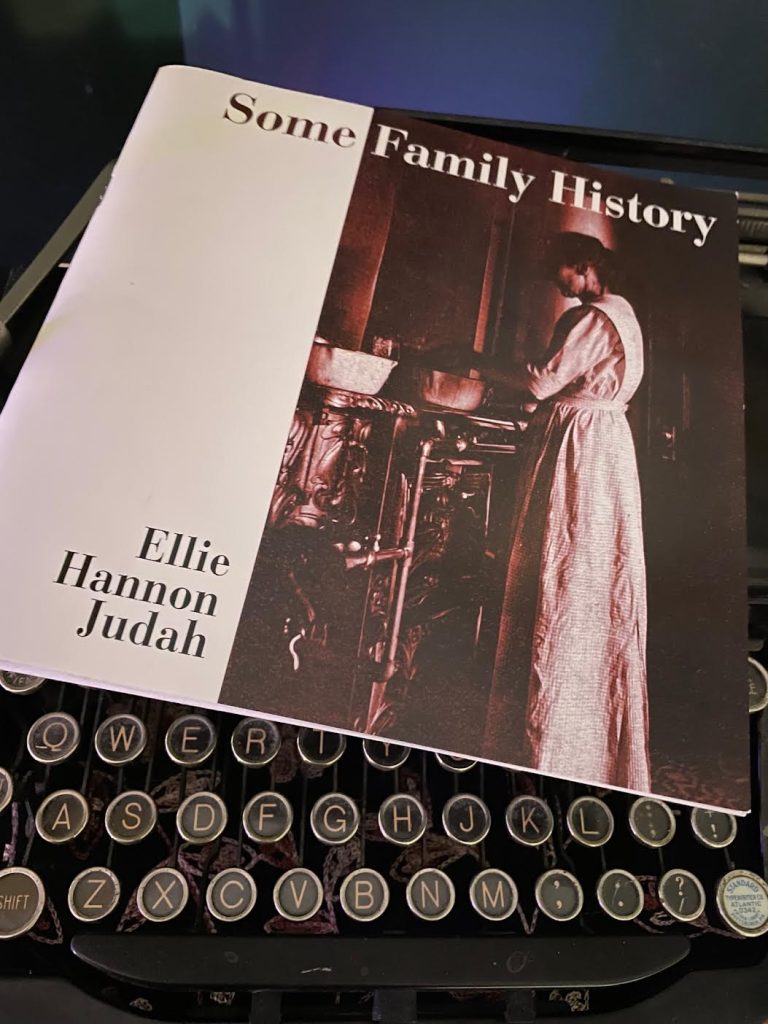
My first “book” was titled Some Family History (no prize for originality there!), a collection of ancestral anecdotes I wanted to preserve for relatives. It was “printed” at a local copy shop–think Staples or Office Depot. Nonetheless, this modest beginning in “publishing” served a dual-purpose: it ensured that family stories would live on, and it enabled me to start somewhere.
I’ll never forget my Aunt Ellie’s face when she saw the cover photo of her long-gone, beloved grandmother standing at a cast iron stove. Small starts can have big impact.
OTHER SMALL STARTS TO TRY.
Submit a commentary or story to your local newspaper. Continue to submit pieces, and it could lead to a regular column. But don’t forget to ask the editor for that column; it won’t materialize unless you pursue it. Another thing: don’t expect to get paid. Newspapers have razor-thin budgets. The real value of such a column is in the platform and profile you’re building for your writing.
Engage in discussion groups and social media pages related to your genre. Are you crafting a dystopian novel about robot werewolves and shapeshifting wood nymphs in outer space? Cool! There are groups for that.
Write an article for an organization’s newsletter or blog. This introduces you to an audience that already exists and builds your credibility in your topic area.
Take a leap. How did I become a contributor to National Public Radio’s All Things Considered? By simply sending a story to the email address listed on their website.
How did I get a blog in the Huffington Post? After a swift rejection from the editors, I unearthed Arianna Huffington’s email address online and pitched directly to her. A dash of gumption and moxie never hurts.
Join a writers’ club in your area and volunteer. The benefits of this are too numerous to even list. Trust me that putting yourself out there in small ways–and among other writers–is essential to get where you wish to be.
Look for publishers open to new writers and those without fancy-pants literary agents in New York.
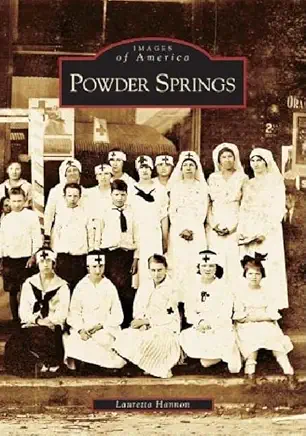
My second book, Images of America: Powder Springs, is a photo history book published by Arcadia Publishing/The History Press. They publish histories of places and people and offer a vast multitude of opportunities for writers.
The royalty is slim, but my book is still in print and providing funds to my local historical society. As a society member, I wanted to generate money for much-needed museum exhibits. I volunteered and produced the book in six weeks (thanks to archival material already in the museum’s vaults). Easy peasy. And it established me as a professional author.
(Note: Google will direct you to such publishers. Contributing to an anthology is another route to a publishing credit. Ask Google to find calls for submissions to anthologies.)
BOOKS THREE & FOUR
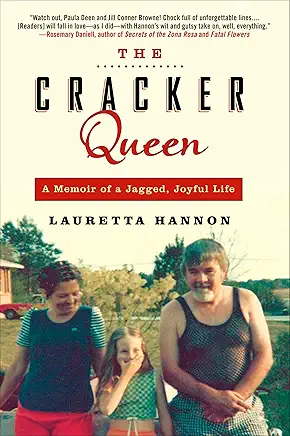
Book number-three was the bestseller. You can read about The Cracker Queen–A Memoir of a Jagged, Joyful Life here. This book changed my life and put me on the course of my soul work. But had I not started small and persisted, it never would have been written.
My fourth work, A Priest Walks Into a Waffle House: Stories From A Gritty, Grace-Filled Life, will be published in September. See how all this flows?
Whatever your writing dream, my message is this: DO NOT LET THE STARTING STOP YOU.
PS–Are you feeling the nudge to tell your own story? Join us for Memoir, She Wrote, the memoir master class, on June 6.